
Pszczolki Municipality
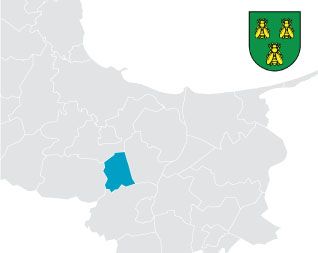
| Residents/Population: | 11 171 |
|---|---|
| Area: | 50 km2 |
| Expenditure per capita: | 5 254,47 zł |
| Website: | www.pszczolki.pl |
| Rulers/Leaders: | |
| Maciej UrbanekMayor of the Municipality | Joanna PrzykłuckaChair of the City Council |
The hallmark of the Pszczółki Municipality is its coat of arms, featuring three golden bees on a green background. The municipality's area is famous for its honey production and beekeeping traditions, which rely on the specific microclimate of these areas and rich vegetation. About 3 million bees live in 37 apiaries within the municipality. Since 2007, Pszczółki Honey (Miód Pszczółkowski) has been on the list of traditional products maintained by the Ministry of Agriculture and Rural Development. It is produced in three types: May, June, and July honey.
The municipality is located on the border of two ethno-cultural regions: Żuławy and Kociewie, in the eastern part of the Tuchola Forest (Bory Tucholskie). Pszczółki is located in close proximity to the main cities of the metropolis. National road No. 91, the Gdynia - Warsaw railway line, and the A1 motorway run through the area of the municipality, making it an important point on the transport route.
Pszczółki has an agricultural and industrial character, also serving as a supply base for a significant area of the metropolis. The municipality is home to both small farms and large ones specializing in commercial agricultural production.
The most important historical monuments in the municipality include the 19th-century Dutch windmill in Pszczółki, the palace and park complex in Żelisławki, and the historic Church of St. Lawrence in Różyny. It is also worth visiting the Museum of Honey - the only such museum in Pomerania.
For several years now, the coat of arms of Pszczółki has consisted of three golden bees on a green background. Interestingly, while being the most recognizable symbol of the municipality, the coat of arms also refers to the bee motif that appeared in heraldry much earlier. Three bees on a blue field can also be found in the coat of arms of the Barberini family, from which Pope Urban VIII descended. And so, each of the insects symbolizes one of the Pope's virtues: diligence; enlightenment and wisdom; and goodness, which is a direct reference to the taste and properties of honey.