
Puck Town
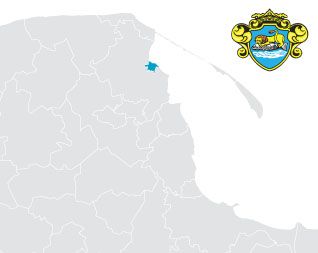
| Residents/Population: | 10 463 |
|---|---|
| Area: | 5 km2 |
| Expenditure per capita: | 10 373,64 zł |
| Website: | www.miasto.puck.pl |
| Rulers/Leaders: | |
| Hanna PruchniewskaMayor of the Town | Justyna ThielChair of the City Council |
Miasto Puck is one of the most frequently visited towns on the Bay of Gdańsk. This Kashubian settlement combines the character of a seaside resort with the identity of a town rich in history and heritage. Puck is regarded as one of the important early Slavic ports on the Baltic Sea and has historically served as a base of the royal fleet. It is also widely known as the site of the symbolic “Marriage of Poland to the Sea”.
The history of the town dates back to the Middle Ages, when it functioned as an important Baltic port, with its origins reaching as far back as the 7th century. Since the 1970s, a 12-hectare underwater archaeological site off the coast of Puck has been explored, revealing numerous discoveries from ancient times, including five wrecks of medieval boats.
Another significant historical feature is the former stronghold of the Dukes of Eastern Pomerania, which later came under the control of the Teutonic Order. After Puck was incorporated into Royal Prussia (which became part of the Polish Crown in 1569), it developed into an important administrative centre of the region, hosting courts, a starosta’s office, and noble assemblies.
During the rule of the Vasa dynasty, Puck served as a fortress and a base of the Polish fleet. The Royal Privateers stationed here were active on the Baltic and North Seas and can be considered a precursor to the Polish Navy.
Today, Puck is best known as the site of the symbolic “Marriage of Poland to the Sea”, performed in 1920 by General Józef Haller. Following the Treaty of Versailles, the Pomeranian Front was established under his command to peacefully restore Poland’s access to the Baltic coast. During the ceremony, Haller cast a platinum ring donated by the Polish community in Gdańsk into the sea, symbolically marking Poland’s return to the Baltic. Every year on 10 February, official commemorations take place in Puck, and a monument to General Haller can be seen in the fishing port.
The cultural, natural, and tourist values of the town make it a popular destination for visitors seeking both relaxation and health benefits. Its Old Town, with a preserved medieval street layout and a historic town hall located on the Old Market Square, is particularly attractive. During the summer season, the square hosts open-air cultural and entertainment events. Nearby stands one of the buildings of the Puck Land Museum, featuring archaeological exhibitions, a reconstructed bourgeois townhouse interior, and temporary exhibitions. The Gothic parish church of Saints Peter and Paul, built between the 13th and 15th centuries, is the oldest and most important monument in Puck.
Sailing enthusiasts can take advantage of the Bay of Puck, which hosts numerous sporting events every year, including regattas and educational sailing programs for children and young people. The bay is one of the best sailing areas on the Baltic Sea, with modern marina facilities supporting sailing, swimming, and windsurfing. The Puck Scout Maritime Centre offers accommodation and training facilities year-round, focusing on maritime and ecological education and providing certified sailing and motorboating courses. For less experienced sailors, yacht cruises around the bay are also available.
Puck is a recipient of the “Fair Play Municipality” award. Among the largest companies operating in the town are “Amex” Mechanical Works, the Pomech machinery factory, Eko-Celkon, and the Dagoma food production plant. Nearly the entire area of the municipality (96%) is covered by local spatial development plans.