
Reda Town
| Residents/Population: | 28 704 |
|---|---|
| Area: | 34 km2 |
| Expenditure per capita: | 5 234,04 zł |
| Website: | www.reda.pl |
| Rulers/Leaders: | |
| Mateusz RichertMayor of the Town | Łukasz KamińskiChair of the City Council |
Reda is a young but dynamically developing town, forming part of the Little Kashubian Tricity (Rumia, Reda, Wejherowo). A direct connection with the Tricity agglomeration is provided by provincial road No. 468 (formerly national road No. 6), the Fast Urban Railway (SKM), and the proximity of the Tricity Bypass.
Due to its location, numerous areas designated for construction, and continually expanding infrastructure, Reda creates excellent conditions for living and for establishing new businesses. Unlike many other Polish municipalities, Reda has consistently recorded a positive rate of natural population growth for years.
The urban infrastructure is constantly developing to meet the needs of the rapidly growing number of residents, including the ongoing expansion of the town's educational facilities. Next to the Reda railway station, a large, integrated transit hub was built as part of a regional investment program, serving not only the residents of Reda but also commuters from surrounding towns.
To ensure the town does not become merely a commuter town but provides its residents with a range of attractions and leisure activities, Reda strongly focuses on culture and sports. Athletes will find here a perfectly prepared athletics stadium with a Polish Athletics Association (PZLA) certificate. A charming Municipal Family Park (Rodzinny Park Miejski) is located in the revitalized riverside area. Reda is also home to Aquapark Reda - a private recreational complex that is unique on a national scale, featuring live sharks and the first rotating water slide in Poland. Tourists are also drawn by the canoe trail on the Reda River and the hiking trails in the Darżlubie Forest (Puszcza Darżlubska) and the Tricity Landscape Park.
Reda is a strong center of Kashubian culture, which remains a constant presence in the daily lives of its residents. Children learn the Kashubian language at school, and every year the Cassubia Visuales competition is organized, where young artists present adaptations of Kashubian motifs in contemporary art. The competition has already gained an international reach.
Lovers of historical monuments will find the following in Reda:
- The railway station and railway settlement complex from around 1875.
- Historic manor sites, whose estate origins date back to the 15th and 16th centuries.
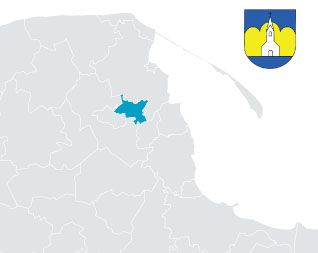
- The Neo-Gothic Church of the Assumption of the Blessed Virgin Mary, which holds a place of honor in the town's coat of arms.