
Rumia Town
| Residents/Population: | 53 316 |
|---|---|
| Area: | 30 km2 |
| Expenditure per capita: | 5 403,61 zł |
| Website: | www.rumia.eu |
| Rulers/Leaders: | |
| Michał PasiecznyMayor of the Town | Krzysztof WoźniakChair of the City Council |
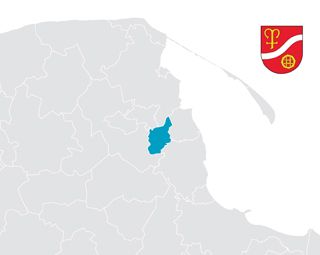
Rumia lies on a stream called Zagórska Struga, in a topographically distinct location at the border of various landscapes. To the north, it is separated by the Reda Canal and vast wetlands known as Mostowe Błota; to the east, it is shielded from the sea by the Oksywie Upland (Kępa Oksywska), which is bordered to the south by the Chylonia Marshes. Together with Wejherowo and Reda, it forms a tri-city complex known as the Little Kashubian Tricity.
Since October 7, 1954 - the day Rumia was granted town privileges - much has changed in the municipality. The town, once a patchwork of four smaller villages, has over the years become the largest Polish town that is not a county seat. What actions have caused Rumia to no longer be perceived merely as a commuter town for the Tricity?
A reliable indicator of modernity is the town's completed and ongoing investments. In recent years, integrated transit hubs were constructed, featuring a tunnel connecting two parts of the town, parking lots, bicycle paths, and bus shelters - a project worth tens of millions of zlotys. Furthermore, a rollerblading and cycling track, a climbing wall with an observation tower, a sledding hill, a dog run, and a rope park are among the successfully completed features of the revitalization of the Zagórze district and Markowiec Hill (Wzgórze Markowca). The town also saw the construction of its first municipal housing in 25 years, and an area that lay fallow for over two decades has become an attractive investment zone.
Ecology is a crucial direction for the municipality's development. Air quality in the town is gradually improving, partly thanks to the expansion of the municipal district heating network. Rumia collaborates in this field with other local governments, drawing on best practices. Examples include regular participation in the European Mobility Week, as well as the implementation of the Mevo Metropolitan Bicycle system and free bus rides for children and youth.
The population of Rumia has been steadily increasing for years, currently exceeding 50,000, and local patriotism is becoming increasingly evident. The town's community eagerly engages in charitable activities, participates in the Civic Budget, donates blood, and even organizes joint town clean-ups. The municipal information bulletin, "Rumskie Nowiny", regularly profiles outstanding individuals, including exceptional enthusiasts and social activists.
For Body and Soul
Despite lacking major traditional tourist attractions, Rumia cannot complain about a lack of visitors. The main magnets are sporting and cultural events. Thousands of people, including those from outside the region, are drawn by recurring events such as the Lotto Duathlon Energy or the Marcin Gortat Camp. Considerable interest is also generated by "July in Rumia" (Lipiec w Rumi) - a summer event series featuring performances by Polish pop stars before large audiences. Past performers have included Ewa Farna, the band Pectus, Kamil Bednarek, Monika Lewczuk, C-BooL, Beata Kozidrak, and the Polish Film Music Orchestra under the baton of Przemysław Pasternak.