
Town and Municipality of Nowy Staw
| Residents/Population: | 7 058 |
|---|---|
| Area: | 114 km2 |
| Expenditure per capita: | 8 608,88 zł |
| Website: | www.nowystaw.pl |
| Rulers/Leaders: | |
| Jerzy SzałachMayor of the Town and Municipality | Marek SzczecińskiChair of the City Council |
Hundreds of years ago, the first settlers of what is now the urban-rural municipality of Nowy Staw recognized the special value of this land, which yields abundant crops. Today, the center of daily life is concentrated along the Święta River, and a significant portion of the residents of the Town and Municipality of Nowy Staw still make a living from agriculture. Developing within the Nowy Staw - Nowy Dwór Gdański - Malbork network of towns, the municipality has become a service center for the Żuławy Agricultural Region.
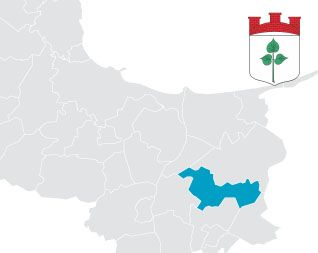
The Town and Municipality of Nowy Staw is located in the northern part of Poland, in close proximity to the coastal zone and within the High Żuławy (Żuławy Wysokie), which mostly comprise land elevated above sea level. The eastern part of the municipality borders directly on the Nogat River along a stretch of about 7 km, while the Święta River and its tributaries flow through the town itself. Thanks to numerous water reservoirs and drainage canals, Nowy Staw is characterized by excellent soils, which are among the most fertile in Pomerania.
Part of the municipality lies within the Nogat River Protected Landscape Area and forms part of an ecological system of protected regions. This system aims to preserve the most valuable natural and scenic features of the area, serving as a refuge for birds and small mammals in the Żuławy region.
Traces of settlement in the municipality can be found in archaeological discoveries dating back as early as the 10th century. In the Middle Ages, these lands belonged to Pomeranian dukes, then to the Teutonic Order and the Polish Crown. Nowy Staw was granted town rights in 1343. In subsequent decades, Polish kings bestowed privileges upon the town, and in the second half of the 16th century, the last of the Jagiellons, King Sigismund Augustus, authorized the construction of new mills, weirs, and bridges in Nowy Staw. In the past, the town was known for gunpowder production, a functioning oil mill, and later for the grain trade and a famous horse market. From 1818, the town belonged to Malbork County. As a result of the Treaty of Versailles in 1920, the town (as Neuteich) was incorporated into the territory of the Free City of Danzig (Gdańsk).
Despite the turbulent history of Nowy Staw, certain unique relics of the past have survived to this day. These include a gable house with a neo-Gothic facade on Mickiewicza Street, St. Matthew's Church - the largest in Żuławy, featuring a three-aisle basilica from before 1400 - and a former neo-Gothic Evangelical church built in 1803-1804.
Despite its modest population, Nowy Staw offers numerous attractions. The Nowy Staw Cultural Center operates in the town center, organizing workshops, interest groups, and hobby clubs for residents, as well as preserving folk traditions. Soon, the Żuławy Gallery will also appear on the local map of cultural institutions in Nowy Staw; it will begin its activities in a former Evangelical church building at the Kościuszko Market Square, adapted for this purpose. A major project involving, among other things, the renovation and adaptation of the interior of the former temple to serve cultural and exhibition functions is currently underway. In August, the town is visited by crowds of motorcycle enthusiasts as part of the Nowy Staw Motorcycle Nights, as well as fans of heavier music who come for the "Metal Time" festival. Every summer, a kayak trip along the Święta River is also organized, attracting numerous residents and tourists.