Wejherowo Municipality

| Residents/Population: | 30 959 |
|---|---|
| Area: | 194 km2 |
| Expenditure per capita: | 5 445,32 zł |
| Website: | www.ug.wejherowo.pl |
| Rulers/Leaders: | |
| Przemysław KiedrowskiMayor of the Municipality | Edmund BiangaChair of the City Council |
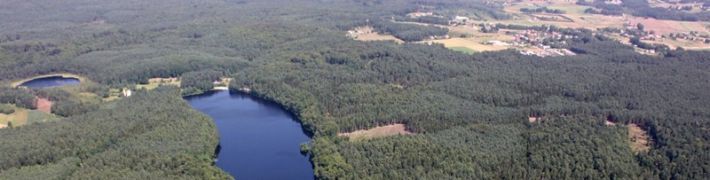
The Wejherowo Municipality (Gmina Wejherowo) is located in Wejherowo County, in the Pomeranian Voivodeship. It covers an area of 200 square kilometers, surrounding the town of Wejherowo, which currently has a population of around 40,000. It consists of 16 rural administrative units (sołectwa), inhabited by over 31,000 residents. The Wejherowo Municipality was established in June 1934 from the merger of the local districts (wójtostwa) in Bolszewo, Gniewowo, Łężyce, and Wejherowo-Zamek, along with several independent manorial estates. The most significant centers include the parish and sołectwo villages of Bolszewo, Gościcino, Góra, Nowy Dwór Wejherowski, as well as Gowino and Orle. Furthermore, the sołectwo villages include Bieszkowice, Gniewowo, Kąpino, Kniewo, Łężyce, Reszki, Sopieszyno, Ustarbowo, Warszkowo, and Zbychowo.
The municipality possesses a rich base of historical monuments. Valuable architectural sites include the church in Góra, built in 1911. It preserves an early Baroque altar from 1665 and original paintings of the "Holy Trinity" and the "Adoration of the Magi". The village is one of the oldest centers of religious life in Pomerania. Meanwhile, the parish church in Bolszewo houses a bronze bell, crafted in 1665 in the workshop of the Gdańsk bell-founder Daniel Tym.
In Piaśnica, there is a war cemetery for the victims of German terror - the site of the greatest martyrdom of Poles in Pomerania. In the first months of World War II, the Nazis shot about 12,000 people there, including the blessed Sister Alicja Kotowska and the first head (wójt) of the Wejherowo Municipality - Major Edward Łakomy. In Biała, there is a cemetery of 28 soldiers who died in September 1939 defending Wejherowo, Reda, Kępa Oksywska, as well as Gowino, Zbychowo, Reszki, and Gniewowo. The cemetery in Łężyce contains 36 mass graves, where 4,249 soldiers of the Soviet Army and 32 soldiers of the 1st "Heroes of Westerplatte" Armored Brigade are buried. They fell in March and April 1945 during the liberation of the Wejherowo County lands. At the cemetery, besides the graves, there is a main monument with the inscription "Glory to the Heroes" and a monument with an Orthodox cross funded by the Wejherowo Municipality.
Due to its proximity to the Tricity and its many natural assets, the Wejherowo Municipality holds the status of being one of the most frequently visited and inhabited areas in Wejherowo County. Three tourist trails run through its territory: the "Darżlubskie Forest" trail (Wejherowo - Krokowa), the "Wejherowski" trail (Wejherowo - Sopot Kamienny Potok), and the "Zagórska Struga" trail (Wejherowo - Gdynia). For guests wishing to combine the beauty of nature with sports and recreation, an 18-hole golf course awaits in Pętkowice. The Sierra Golf Club complex is spread over an area of 82 hectares, located about 25 kilometers from the western borders of the Tricity. In Kniewo, there is an African ostrich farm. Besides interacting with these exotic birds and having the opportunity to taste delicacies prepared from them, visitors can also enjoy fishing and mushroom picking on-site. Horse-drawn carriage rides are also organized for those interested, as well as sleigh rides in the winter. Horse lovers can also enjoy spending time with these animals at several stud farms located throughout the Wejherowo Municipality. Among the municipality's numerous recreation spots, the lakes are particularly popular during the summer season - Borowo, Bieszkowice, Wyspowo, and Zawiat, as well as Lake Orle with the Reda Canal. During the summer holidays, a bathing area supervised by lifeguards from the Volunteer Water Rescue Service (WOPR) operates 7 days a week at Lake Zawiat in Bieszkowice. In 2011, the Wejherowo Municipality participated in the construction of public tourist infrastructure under the name "Tourist Trail of Northern Kashubia". The project included the creation of bicycle paths with a total length of 133 km, running through several municipalities of the Wejherowo and Puck counties. Thanks to this initiative, the Wejherowo Municipality gained about 13 km of new bicycle routes. Since December 2011, the first ice rink in the Wejherowo Municipality, built under the "White Orlik" program, has been operating at the sports complex in Gościcino. In the winter season, it is available 7 days a week for all residents of the Wejherowo Municipality.
In 2012, the first educational and workshop facility in the Wejherowo Municipality, the "Woodworker's Manor" (Dworek Drzewiarza), began its operations, transformed into the Municipal Cultural Center with its headquarters in the Woodworker's Manor in Gościcino. The cultural initiatives implemented there allow visitors to learn about the earliest history of the forests and the forestry industry, as well as showcase the daily life of former residents. The Municipal Cultural Center hosts exhibitions, concerts, and artistic workshops.
The Wejherowo Municipality has enormous potential for the development of entrepreneurship, successfully utilized in the existing industrial zone by both local and foreign investors. Over 1,000 business entities operate here. Historically, the oldest and one of the largest plants was KLOSE - the Gościcino Furniture Factory, which operated for over a century and celebrated its 110th anniversary in 2009. Currently, the nationally renowned door factory Porta KMI operates here, along with one of the leading producers of metal roofing tiles - Balexmetal Bolszewo, and the water supply network contractor - PI Hydroinstal Drewa. Their activity and favorable financial results serve as an incentive for further entrepreneurs and attest to the municipality's favorable atmosphere for business.