News
Driven by knowledge. Polish Tricity is destined to be an academic powerhouse.
Although well known for trade and mercantilism Tricity is not just that. It’s a unique pipeline of talent, that runs on a different, sometimes more valued type of currency: knowledge. And now, the academic landscape is getting even better.
pic. Pexels/Mark Sorensen
Legacy of Curiosity
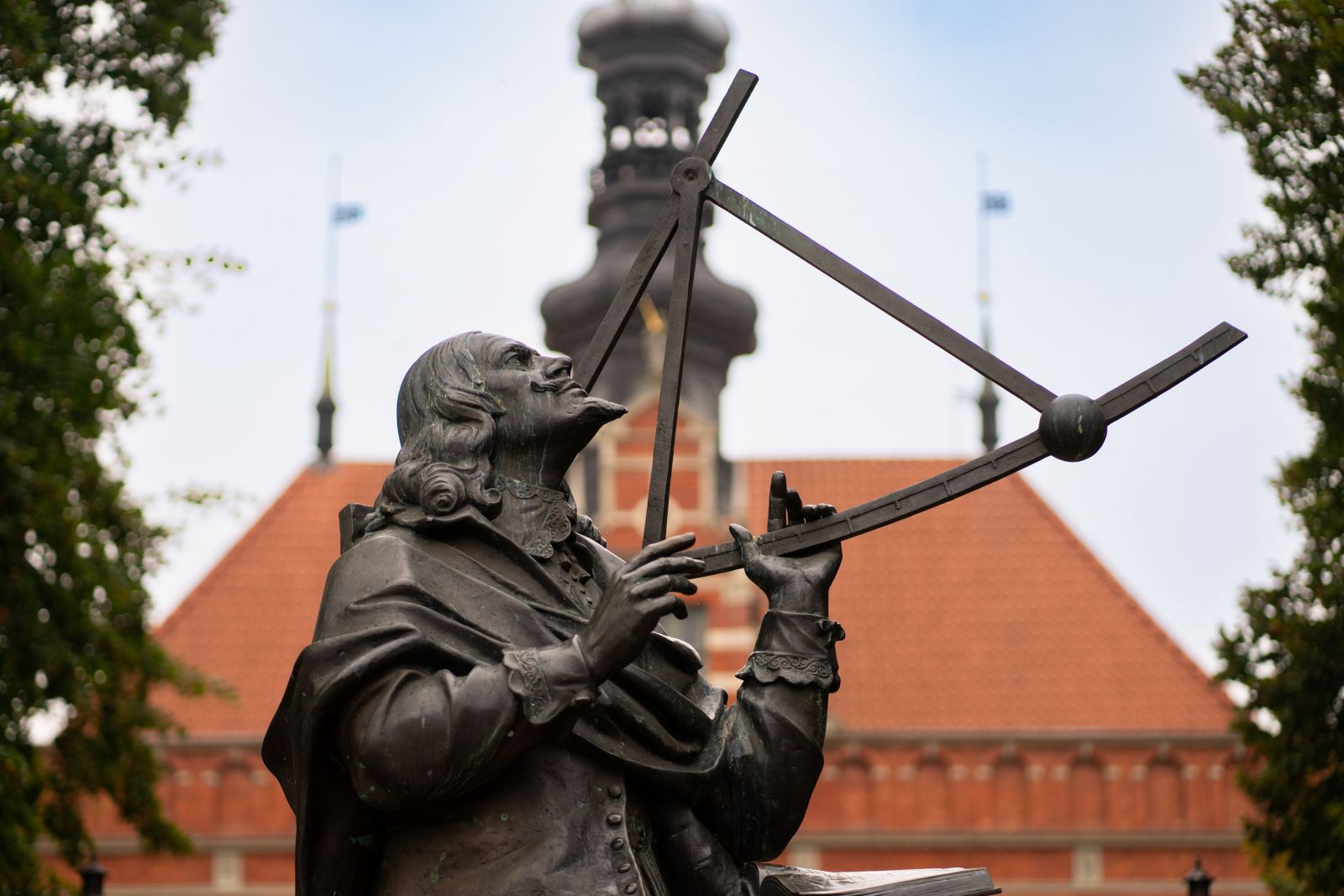
The academic roots run deep in the Pomeranian region. In the 16th century, the Atheneum Gedanensis (Gdańsk Academic Gymnasium) was established, which would be a groundwork for the future intellectual development. It was a time when Gdańsk was flourishing as one of the most important centers of not only Polish but also European renaissance. In the next century, this was the city of Johannes Hevelius, famous astronomer who is known as the father of lunar topography. This is also the hometown of Daniel Fahrenheit, physicist whose temperature scale is still used today in many countries.
Although Gdańsk went through a lot over the next centuries, the academic spirit never faded. That spirit of innovation survived into the 20th century with the founding of the Gdańsk University of Technology (PG) in 1904, and later the Medical University of Gdańsk (GUMed) in 1945 and the University of Gdańsk (UG) in 1970. For decades, these three institutions operated independently, each building reputations in their respective fields. But in a globalized, highly competitive scientific landscape, going it alone is sometimes not enough.
The Power of Unity
In 2020 the academic landscape of Tricity has changed. Rectors of the three universities decided to join forces – they established the Fahrenheit Union of Universities in Gdańsk (FarU). This strategic federalization is more than just a ceremonial partnership as it is designed to merge resources, research potential, and global reach of Pomerania’s top three academic centres. As they are mixed between their fields, it fuels the interdisciplinary innovation need by running joint programs, like e.g. Medical Engineering, allowing students and researchers to cross boundaries to drive innovation. Being together also means bigger exposure and the unified front makes Gdańsk a far more attractive place for international funding, research grants and attracting talent.
Mandate for Science
FarU is not the only academic accelerator that the Tricity has in store. A dream set many years ago by the late Mayor of Gdańsk Paweł Adamowicz has finally come to life. Local leaders with the cooperation of government, managed to finally unite the region through the long-awaited Pomeranian Metropolitan Act. This legislation unifies 61 local governments and around 1.7 million residents, but also does something unprecedented for Polish academia. The new law legally guarantees that at least 5% of the metropolis's budget must be allocated directly to scientific research and cooperation with universities. It means the Tricity is no longer just relying on national grants or tuition but is systematically injecting millions into its own brain trust. It transforms the region into an integrated ecosystem where municipal growth and academic research are permanently fused.
Building the Future, Today
If the Metropolitan Act is the fuel and FarU is the engine, initiatives like Q-Camp are where the rubber meets the road. Hosted in Gdańsk, Q-Camp is Poland’s longest-running quantum summer school. It highlights exactly what the Metropolis does best, which is merging high-level academic theory with real-world industry applications. Organized with heavy involvement from the University of Gdańsk (via the International Centre for Theory of Quantum Technologies) and industry partners like Kainos, Q-Camp brings together minds from undergraduate to PhD levels.
Students dive into quantum cybersecurity, quantum information science, and machine learning in quantum technologies, preparing for the upcoming quantum revolution. With a guaranteed pipeline of local academic funding now enshrined in law, initiatives like this will only scale, directly linking student talent with the tech companies driving the region's economy.
A Metropolis with Momentum
The story of the Metropolia Gdańsk-Gdynia-Sopot is a story of evolution. It has transformed from a historic port into a unified, legislatively backed academic heavyweight.
Through the strategic vision of the Fahrenheit Union, the cutting-edge exploration at Q-Camp, and a historic law that dedicates 5% of the budget to science, the Tricity is making one thing clear to the rest of Europe: The future is driven by knowledge, and that future is being engineered right here on the Baltic coast.