
News
Gdańsk University of Technology Launches NATO DIANA Living Lab for Innovative Military Solutions
The Gdańsk University of Technology (PG) has officially launched the NATO DIANA Living Lab, a new space dedicated to presenting and testing advanced security and defense technologies developed under the NATO DIANA program. Established in partnership with the Polish Ministry of National Defence and the FORT Kraków DIANA Accelerator Poland, this facility focuses on the practical verification of new solutions in conditions that closely resemble real-world operational scenarios, moving beyond standard laboratory environments.
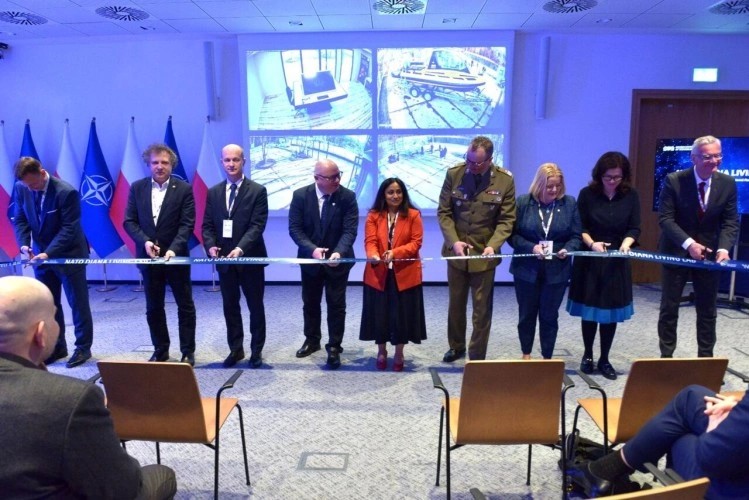
Photo: Politechnika Gdańska
During the official inauguration, which was attended by representatives from PG, NATO DIANA, and the Ministry of National Defence, several cutting-edge technologies were demonstrated. A major highlight of the event was the presentation of a drone detection and identification system deployed on the university campus. Other showcased innovations included next-generation communication systems, cryptography technologies, and cybersecurity tools for protecting critical infrastructure. These solutions were developed by companies recognized as NATO DIANA Innovators, such as IS-Wireless, ResQuant, Goldilock, and Revobeam.
.jpg)
Photo: Politechnika Gdańska
The strategic importance of this initiative was emphasized by multiple leaders. Professor Krzysztof Wilde, the Rector of PG, stated that modern national security relies on knowledge, cooperation, and the rapid testing of solutions to combat hybrid threats. He stressed that in today's geopolitical climate, a technical university must be a place of responsible action. Jyoti Hirani-Driver, Acting Managing Director of NATO DIANA, noted that creating an environment close to operational realities will accelerate the implementation and integration of the latest defense technologies by making them easily accessible to industrial partners, investors, and end-users.
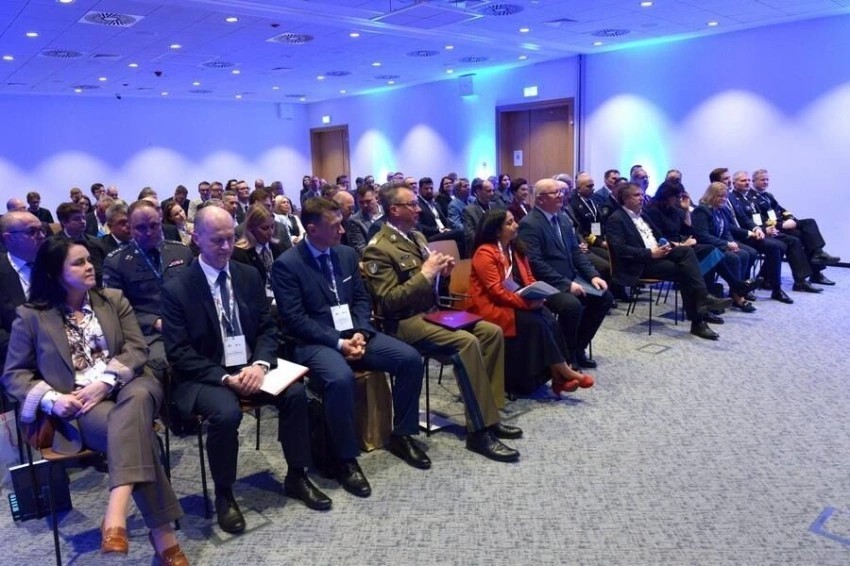
Photo: Politechnika Gdańska
The lab's location in Gdańsk is considered one of its greatest assets. The university's infrastructure and its proximity to the Baltic Sea allow for comprehensive technology testing across land, air, and maritime domains. In official letters read during the event, Polish President Karol Nawrocki described the Living Lab as a bridge between the laboratory and the battlefield that fills a critical gap in the Alliance's innovation architecture. Furthermore, Deputy Prime Minister and Minister of National Defence Władysław Kosiniak-Kamysz highlighted that modern deterrence capabilities are defined not only by the sheer amount of equipment or troops but also by technology, social resilience, innovations, and shared responsibility.
Looking ahead, the NATO DIANA Living Lab is set to become a vital hub for dual-use technology innovators. The facility will fully open to all innovators within the program and begin hosting its first visits for interested end-users in the second half of 2026.