News
The 1st Baltic Rectors' Forum Inaugurated in Gdańsk
Energy security, the advancement of offshore technologies, a nuclear energy renaissance, and regional cooperation took center stage on June 29 as the 1st Baltic Rectors' Forum officially opened at the University of Gdańsk Library.
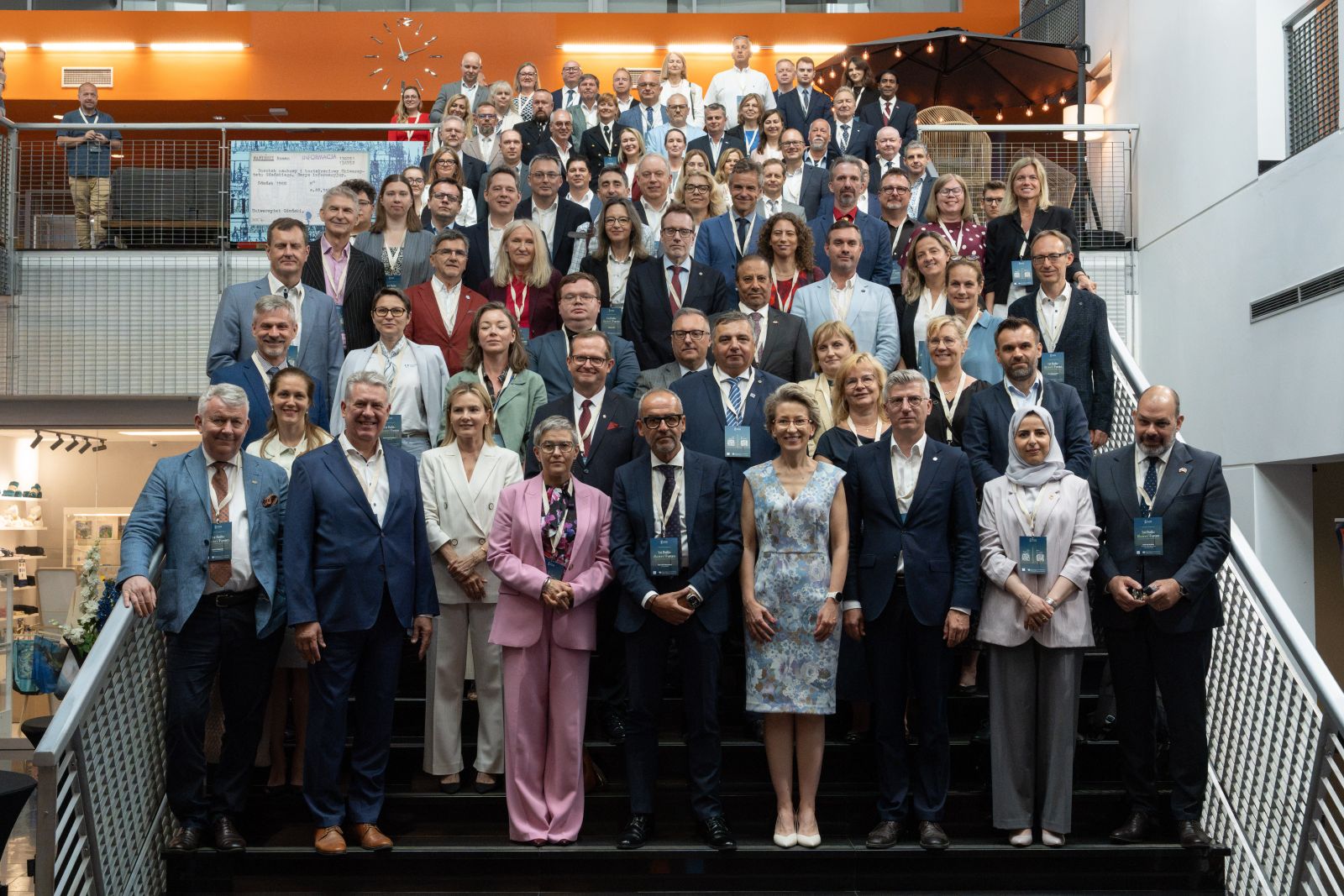
pic. University of Gdańsk
- History teaches us a simple lesson. When cooperation grows, the Baltic region flourishes - noted Prof. Piotr Stepnowski, Rector of the University of Gdańsk, during his opening remarks.
A modern metropolis is no longer defined merely by its infrastructure, roads, and ports. Today, it is primarily driven by human capital and the ability to generate knowledge that translates into tangible solutions for local businesses and residents. The Forum underscored that knowledge remains one of the most powerful engines for regional development.
While higher education institutions are often viewed as insular academic silos, the reality within the Pomeranian metropolis is quite different. By collaborating with one another, as well as with business leaders and local governments, Tri-City universities are actively unlocking new social and economic opportunities.
The Golden Triangle
A key takeaway from the morning session was the urgent need to strengthen the ties between the three pillars of a modern state: academia, commerce, and local government.
- We already have science, and we have business. However, to forge a true 'golden triangle, you need the local government - emphasized Gdańsk Mayor Aleksandra Dulkiewicz. She pointed out that the cities and municipalities within the Metropolis serve as the natural bridge connecting innovative academic ideas with their practical market applications.
- In the current geopolitical landscape, collaboration among business, universities, and the public sector is vital. Through the new format provided by this Forum, we can demonstrate our commitment to sustainable development to investors while achieving our strategic goals, particularly in the energy sector - stated Prof. Arturas Razbadauskas of Klaipeda University.
- The Baltic region is becoming increasingly critical for two main reasons: business and energy - observed Sławomir Radoń, Executive Director for Strategy and Innovation at ORLEN. Throughout the conference, participants continually highlighted the growing prominence of the Baltic macro-region, framing the Forum as the official launch of a systemic dialogue between academia, the private sector, and government administration at all levels.
Security, Diplomacy, and Green Transformation
This dialogue centered on the pressing challenges facing the macro-region. The Forum's agenda demonstrated that modern cooperation transcends local borders, with discussions among diplomats and experts from top European universities focusing on several strategic fronts.
A substantial portion of the debate was dedicated to geopolitics and security. Panelists analyzed the Baltic Sea region's resilience against hybrid threats from the perspectives of both NATO and the European Union, while also exploring the future of regional cooperation in an era of geopolitical fragmentation. These high-level discussions featured diplomatic representatives and ambassadors from Ukraine, Germany, Turkey, Qatar, and Saudi Arabia.
Energy challenges proved to be an equally crucial topic. The macro-region's energy transformation was heavily discussed, with a specific focus on offshore wind farms and the ongoing renaissance of nuclear power. Panelists also debated the extent to which the close-knit cooperation seen among North Sea countries could serve as a viable blueprint for the Baltic Sea.
Naturally, these issues are inextricably linked to environmental protection and sustainable development. A major focal point of the deliberations involved building climate resilience and protecting marine ecosystems, particularly in the context of the HELCOM commission's ongoing efforts, alongside the broader development of the "Blue Economy."
These conversations culminated in a panel dedicated to academic cooperation. Participants reflected on decades of joint university programs while simultaneously charting new paths for collaborative research, student mobility, and the innovations needed to support regional climate policies.

pic. University of Gdańsk
The Gdańsk Declaration
The finale of the summit, and the practical manifestation of these shared aspirations, was the signing of the Gdańsk Declaration under the auspices of the Baltic Energy Council. This landmark document lays the groundwork for a unified strategy across the entire macro-region. Its core premise is the close coordination of research, development, and the scientific policies of universities spanning Sweden, Denmark, Finland, Germany, the Baltic states, and Poland. Furthermore, the signatories committed to actively supporting the region's energy independence, advancing offshore wind and green technologies, and championing the sustainable growth of the maritime economy and environmental protection.
This partnership, operating on an unprecedented scale, clearly illustrates the vast potential of the local Metropolis. Thanks to initiatives like this, Pomerania is evolving into much more than a vital infrastructural hub, it is becoming a premier center for strategic thought. It is precisely here that international academic expertise directly translates into the advancement of modern industry, groundbreaking innovation, and the creation of highly specialized jobs for the community.