News
The Ticking Quantum Clock
AI is the talk of the town. Companies and governments scramble to introduce it to their workflows, while investors seek the next big AI product. In the meantime, Pomerania is looking forward to something that is already deemed as the future of tech by the biggest countries and governments. Quantum technology.

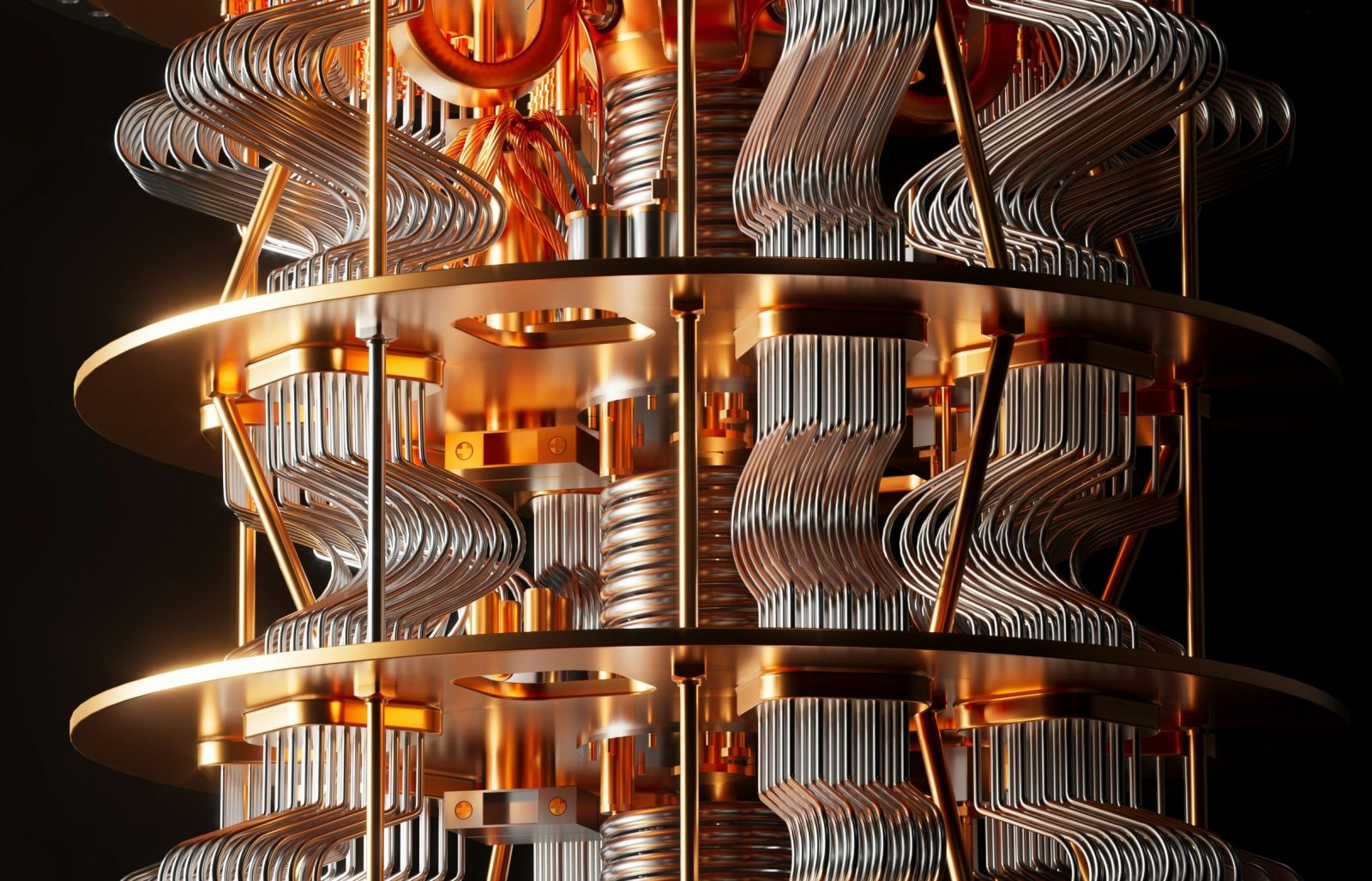
Kevin Ku/Unsplash
Ahead of the curve
The shift is already in motion. A recent presidential directive signed by former U.S. President Joe Biden gave every federal agency just thirty days to designate a Post-Quantum Cryptography (PQC) Lead, making them personally responsible for migrating away from today’s encryption. This wasn’t a research grant or a pilot program. It was a deadline. Simultaneously, the French government has also taken steps that will act as a leap forward. The Elysee Palace aims to stop certifying security products that can’t handle quantum-resistant cryptography. Canada has set its own PQC migration deadline, requiring quantum-readiness in new federal digital contracts with a 2031 cutoff. Three governments have used three different legal instruments to convey the same message: quantum computing is coming with all its perks and dangers. The encryption securing banking, healthcare records, defence communication, and likely every login screen on earth has an expiration date that keeps getting closer.
This is somewhat of a part of the quantum story that is not garnering a lot of attention, but it should. Most coverage treats quantum computing as a curiosity. Qubits, labs and theories all locked in a distant future that seems like sci-fi movies from the 90’s. But the actual pressure isn’t coming from a physicist, who like in a film warns about impending dangers of the quantum technology. It’s coming from procurement officers and national cybersecurity agencies who’ve done the math. A powerful quantum computer will eventually be able to break RSA and elliptic-curve encryption, two things that might be the most trusted ways on the internet to keep important data safe. Although nobody knows when exactly the new age of encryption will arrive, cautious governments have already been preparing. Migrating the whole cryptographic infrastructure of a public administration takes years, so the big players have already started the transition, as mentioned earlier. Furthermore, China is reportedly putting an estimated 15 to 17.6 billion dollars into quantum technology, vastly outpacing its global peers. This government-backed push, that is featured 15th Five-Year Plan, aims at dominating sectors ranging from molecular modelling to military applications… and cryptography. The US investment of 3.7 billion dollars and Germany’s 3.3 billion dollars seem modest by comparison and aimed less at winning a computing benchmark and more at not being the country still running breakable encryption when someone else’s quantum machine works.
Quantum grassroots
Poland is watching this from a slight distance. There’s no signed national quantum strategy yet, and Poland isn’t among the signatories of the December 2023 European Quantum Technologies Declaration. People close to the field say that it is not a matter of missing capabilities but a lack of decision-making by politicians. What Poland does have is concrete but somewhat modest. PIAST-Q, the country's first quantum computer connected to the European EuroHPC network, went live in June 2025 at the Poznań Supercomputing and Networking Center. Trapped-ion technology, twenty-plus physical qubits,12.28 million euro split evenly between the Ministry of Digitalisation and EuroHPC JU. The ministry has also sketched out a Quantum Technology Development Plan aiming for around 1 billion euro in funding by 2035. Although the planning seems to be in its early stages the money and investment goal is real.
Look closer upon the northern Kashubian shores and you will see two of the country’s important quantum assets sitting in Gdańsk. The University of Gdańsk runs the International Centre for Theory of Quantum Technologies, built on a 35 million PLN grant, which was secured in partnership with Austrian Academy of Sciences by two distinguished professors Marek Żukowski and Paweł Horodecki. This vast research network spans over the globe, bringing it to students interested in earning Quantum Information Technology degree. As is common, while the University of Gdańsk takes the theory route, the practical side is taken by Gdańsk University of Technology. In May 2024 the academics have signed an agreement with Finland’s IQM Quantum Computers that covers cryptography, medicine and AI. The PG (Politechnika Gdańska) is actively working to pair their existing supercomputer with an actual quantum machine, which after being installed locally, would make the Tricity only the second place in Poland with hardware on the ground.
Quantum applied, value delivered
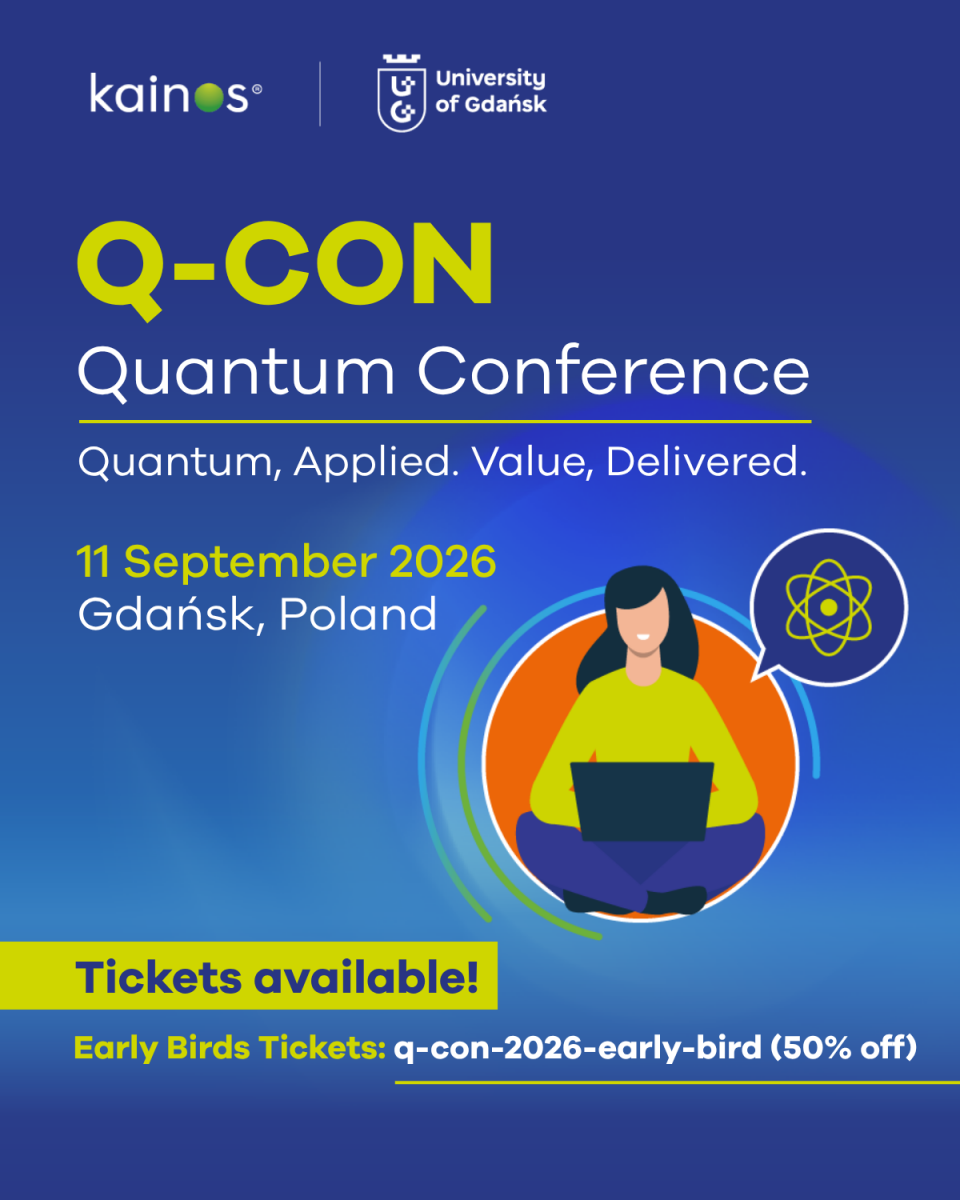
And this is exactly the moment when we need to circle back to the post-quantum cryptography, the theme of this year’s Q-Con Quantum Conference. This will be the 3rd edition of the event run by the University of Gdańsk, Kainos, ICTQT and the CODE:ME Foundation and its focus will be on quantum cybersecurity and post-quantum cryptography specifically. Q-Con has been steadily developing, just as the quantum technologies. The first conference in September 2024 had 150 attendees and the next year 200 delegates from 25 countries. In addition, people interested in the technology could spend time at a Quantum Summer School, work with a startup called Q Docks and take part in a hackathon. Q-Con has been attracting illustrious speakers as well, such as IBM’S Charles H. Bennett, one of the actual founders of quantum information theory, or Harald Weinfurter of LMU Munich. This isn’t a regional academic meetup padding its guest list, but a conference that picked a topic that’s evolving from theory into government programs and executive orders.
If you wish to listen to discussions about the post-quantum world led by accomplished members of the Triple Helix sign up here:
The clock is ticking, the deadlines are set, the race is ongoing – clearly quantum tech is inevitable. Now it’s about us, how we prepare.